logo
Our Services

Equipped For Client Success

Avaap delivers expertise, personalized support, and results that advance our customers’ toughest challenges.

Explore All Services

Strategic Technology Solutions →

Workday Implementation Snowflake Implementation IT Strategy & Governance AI-Powered Business Solutions Post-Production Support

Data, Analytics, & AI →

Data & AI Strategy Data Platform Modernization AI-Powered Insights Data Visualization & Interaction Data Workload Migration & Conversion

Organization Transformation & People Solutions →

Organizational Change Management Avaap Change Academy™ Change Maturity Assessment Program & Project Enablement
  • Our Partners
    • Workday
    • Snowflake
    • Tableau
    • Alteryx
    • All Partners →
  • Our Customers
    • Higher Education
    • State & Local Government
    • Transit & Special Districts
    • All Industries →
  • Who We Are
    • About Avaap
    • Careers & Culture
  • What We Think
    • Thought Leadership
    • Webinars
    • View All →
Work With Us
Search
logo
  • Avaap
  • Our Services
    • Strategic Technology Solutions
      • Workday Implementation
      • Snowflake Implementation
      • IT Strategy & Governance
      • AI-Powered Business Solutions
      • Post-Production Support
      • All Strategic Technology Solutions
    • Data, Analytics, & AI
      • Data & AI Strategy
      • Data Platform Modernization
      • AI-Powered Insights
      • Data Visualization & Interaction
      • Data Workload Migration & Conversion
      • All Data, Analytics, & AI
    • Organization Transformation & People Solutions
      • Organizational Change Management
      • Avaap Change Academy™
      • Change Maturity Assessment
      • Program & Project Enablement
      • All Organization Transformation & People Solutions
    • All Services
  • Our Partners
    • Workday
    • Alteryx
    • Tableau
    • Snowflake
    • All Partners
  • Our Customers
    • Higher Education
    • State & Local Government
    • Transit & Special Districts
    • All Customers
  • Who We Are
    • About Avaap
    • Careers & Culture
  • What We Think
    • Thought Leadership
    • Webinars
    • View All
Explore All Services
Work With Us
Menu

June 30, 2026 by Craig Dougherty

Modernizing data and analytics is a priority for state and local agencies. As organizations look to reduce operational burden, improve security, and scale analytics, Tableau Cloud migration is becoming a key initiative. 

Many agencies and even entire states are evaluating how to migrate Server to Tableau Cloud while maintaining access to critical data and minimizing disruption. 

This guide provides a clear, practical overview of what the migration process looks like, along with the benefits and considerations for public sector teams. 

What is Tableau Cloud Migration and What Does it Involve? 

Tableau Cloud migration is the process of moving analytics assets from an on-premises Tableau Server environment to a fully managed cloud platform. 

This includes: 

  • Dashboards and workbooks 
  • Data sources and connections 
  • Users and permissions 
  • Governance and security configurations 

The goal is not just to move content, but to modernize how analytics are managed, accessed, and scaled across the organization. 

Why State and Local Agencies Are Moving to Tableau Cloud 

For public sector organizations, maintaining legacy analytics infrastructure can limit scalability and efficiency. 

Tableau Cloud offers a modern alternative by enabling agencies to: 

  • Scale analytics without infrastructure constraints 
  • Reduce the burden of system maintenance and upgrades 
  • Enable secure data sharing across departments 
  • Provide broader access to data for decision makers 

By shifting to a cloud-based analytics platform, agencies can focus less on managing systems and more on delivering insights that support mission outcomes. 

Common Challenges in Tableau Cloud Migration 

While the benefits are clear, migration from Tableau Server to Tableau Cloud requires careful planning. 

Common challenges include: 

  • Identifying and organizing existing dashboards, users, and data sources that NEED to be migrated 
  • Cleaning up Tableau content that is no longer necessary 
  • Configuring source data connections in the most effective and secure manner 
  • Managing the migration process without disrupting users 
  • Proper user communication messaging and timing 
  • Ensuring embedded external content is properly repointed after migration 
  • Validating that dashboards function properly after migration 

For larger or more complex environments, these steps can introduce risk if not approached in a structured way. 

A Practical Approach to Tableau Cloud Migration 

A successful Tableau Cloud migration strategy follows a structured process designed to reduce risk and maintain continuity. 

1. Assess your current environment 

Understand your existing analytics landscape, including users, dashboards, and data dependencies. Identify stale or unused content to ensure a clean start in your cloud environment. 

2. Plan the migration 

Develop a clear roadmap that defines timelines, testing strategy, communications, and cutover planning. 

3. Execute the migration 

Move users, content, and data sources in a controlled and structured way that minimizes disruption. 

4. Test and validate 

Ensure dashboards, permissions, and data connections to perform as expected. 

5. Support post go-live adoption 

Monitor performance and provide support to ensure a smooth transition for users. Maintain an open line of communication. 

This approach helps maintain access to critical data while minimizing disruption during the migration process. 

How to Minimize Risk During Cloud Migration 

For public sector teams, minimizing disruption and maintaining trust is critical. 

Best practices include: 

  • Communicating clearly with stakeholders throughout the process 
  • Establishing realistic timelines and expectations 
  • Testing thoroughly before go-live 
  • Planning for a controlled transition from server to cloud 

A structured and transparent approach ensures that users experience little to no disruption. 

Prepare for Your Tableau Cloud Migration 

If Tableau Cloud is on your roadmap, understanding what a successful migration looks like is an important next step. 

In our upcoming webinar, Avaap and Tableau will walk through: 

  • The end-to-end Tableau Cloud migration process (including timeline expectations) 
  • What to expect during each phase of migration 
  • Best practices to reduce risk and disruption 
  • Lessons learned from working with public sector organizations 

Register for the webinar 

Filed Under: Posts Tagged With: data and analytics, government, tableau

June 15, 2026 by Annaleah Morrow

Higher education institutions are under increasing pressure to improve student outcomes while navigating complex data environments. 

Many assume they must complete their Workday implementation before addressing data modernization, analytics, or student retention initiatives. 

Xavier University is proving otherwise. 

By modernizing its data environment in parallel with its Workday rollout, Xavier accelerated its student success strategy and established a scalable foundation for long-term impact. 

The Challenge: Limited Visibility Slowed Proactive Student Support 

Like many institutions, Xavier University was committed to improving retention and graduation outcomes but faced challenges due to fragmented data systems. 

Before this initiative: 

  • Student data lived across multiple systems and reports 
  • Advisors lacked visibility into academic, financial, and engagement indicators 
  • Faculty and staff had to piece together a student’s full experience 
  • Leadership lacked a unified, real-time view of persistence trends 
  • Evaluating outreach effectiveness required manual analysis 

As a result, student success teams relied heavily on manual reporting processes, limiting their ability to act quickly and proactively. 

A Strategic Start: Aligning Around Data-Driven Student Success 

Xavier partnered with Avaap’s Data, Analytics, and AI team to define a shared vision for data-driven student success. 

Over two months, the team established a strong foundation through: 

  • A current-state assessment of data and reporting processes 
  • More than 40 stakeholder interviews across eight departments 
  • Documentation of institutional goals and priorities 
  • Alignment on a long-term analytics strategy 

This work ensured the solution would address immediate needs while supporting future innovation. 

The Approach: Modernizing Data in Parallel with Workday 

Rather than taking a sequential approach, Xavier advanced data modernization alongside its Workday implementation. 

This allowed the university to: 

  • Deliver insights earlier in the transformation process 
  • Avoid delays associated with waiting for a fully mature ERP 
  • Establish a strong data foundation while systems were evolving 

As Xavier CIO Sheri Thomas shared: 

“By modernizing our data in parallel with our Workday implementation, Xavier was able to accelerate our student success strategy. Using Snowflake to unify Workday data with other critical sources enabled our first student persistence analytics capabilities, delivering immediate value and empowering leaders to support students proactively.” 

The Solution: A Unified Platform for Student Retention Analytics 

Working together, Avaap helped Xavier implement a modern data environment designed to support proactive student success. 

Centralized Data Platform 

  • Snowflake serves as the unified cloud data platform 
  • A Student 360 data model brings together data from across the institution 
  • Expanding Workday integrations strengthen the connection between systems and analytics 

Automated Data Processing 

  • Alteryx automates data preparation 
  • Manual reporting processes are significantly reduced 

Interactive Analytics and Dashboards 

  • Tableau dashboards provide intuitive, interactive visualization 
  • Insights are accessible to both advisors and leadership 

Supporting Advisors with Timely, Actionable Insight 

The platform enables student success teams to evaluate patterns across key indicators: 

  • Academic performance 
  • Financial indicators 
  • Student engagement signals 
  • Enrollment and progression patterns 

With frequently updated data, advisors can: 

  • Identify students who may need additional support 
  • Search and filter students by ID, major, cohort, or indicators 
  • Understand enrollment patterns and term-to-term progress 

This reduces time spent gathering information and increases time spent supporting students. 

Enabling Strategic Decision-Making for Leadership 

In addition to supporting advisors, the platform provides leadership with a strategic view of student success. 

Leaders can: 

  • Monitor persistence and enrollment trends across cohorts 
  • Identify patterns across academic, financial, and engagement indicators 
  • Evaluate the effectiveness of student success initiatives 
  • Inform institutional planning and investment decisions 

The Results: Earlier Intervention and Stronger Outcomes 

Xavier now has a modern analytics platform that enables more proactive and informed decision-making. 

Key outcomes include: 

  • Earlier student support through improved visibility into student needs 
  • More effective advisor time with less effort spent on manual reporting 
  • Institution-wide visibility into persistence trends 
  • Reduced manual reporting through automation 
  • A foundation for future innovation across admissions, student success, and planning 

What’s Next: Expanding the Impact of Analytics 

The Undergraduate Student Persistence Analytics platform represents the first step in a broader vision for data-enabled decision-making. 

Future opportunities include: 

  • Evaluating the effectiveness of student support initiatives 
  • Expanding insights for admissions and enrollment teams 
  • Supporting academic departments with program-level analytics 
  • Continuing to integrate new data sources through Workday and Snowflake 

Together, these efforts are helping Xavier create a more connected, proactive student success ecosystem. 

What Higher Ed Leaders Can Learn 

Xavier’s experience reinforces a key takeaway: 

Data modernization and Workday transformation do not need to happen sequentially. With the right approach, they can progress together to deliver faster, more meaningful results. 

Institutions can begin building retention analytics capabilities even without fully mature data environments when they focus on collaboration, practical progress, and scalable architecture. 

Join the Webinar: See the Approach in Action 

Want to learn how to apply this approach at your institution? 

In the upcoming webinar, Scaling Student Success: Advancing Snowflake and Workday in Parallel, you’ll hear directly from: 

  • Sheri Thomas, AVP and Chief Information Officer, Xavier University 
  • Kimberly Moore, VP of Student Affairs and Chief Success Officer, Xavier University 
  • Annaleah Morrow, Ph.D., VP of Customer Success, Avaap 

You’ll walk away with: 

  • Practical steps to advance student retention analytics during an active Workday transformation 
  • Guidance on structuring a collaborative data initiative 
  • Approaches for navigating data quality challenges 
  • Insights into how cloud platforms like Snowflake support scalable data foundations 

Save your spot to explore how Xavier is advancing student success with modern data. 

Register for the Webinar

Filed Under: Posts Tagged With: digital transformation, erp, Snowflake, tableau, Workday

April 27, 2026 by Ben Bell

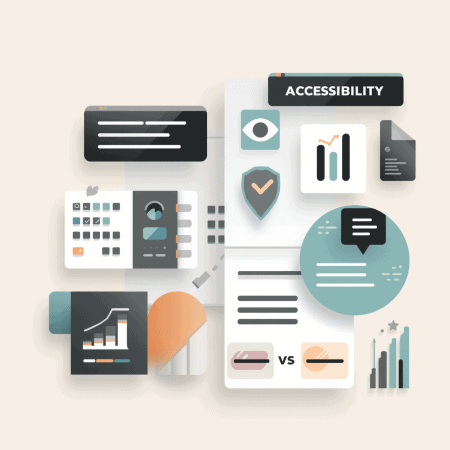
Public-facing dashboards must meet strict accessibility requirements. That means the Web Content Accessibility Guidelines (WCAG) mapped remediation to alt text, color contrast, keyboard navigation, screen-reader order, and semantic structure. For government and public sector organizations, accessibility is not optional. It is a requirement tied directly to compliance, funding, and public trust. 

The challenge is that each BI platform handles accessibility differently. Tableau, Power BI, and other BI tools each apply accessibility rules in their own way, creating inconsistency and risk across dashboard environments. 

Why Manual Accessibility Remediation Falls Short 

Manual BI dashboard accessibility remediation is often uneven, inconsistent, and slow. Without a standardized, platform-aware approach, accessibility fixes vary by developer, dashboard, and tool. 

When a compliance complaint, audit finding, or federal funding review arises, agencies are frequently forced into rapid remediation. That response often happens without the internal expertise needed to act confidently and efficiently. 

This gap quickly becomes more than a technical issue. It creates legal exposure, reputational damage, and remediation costs far greater than proactive investment. 

As state and federal accessibility mandates tighten, organizations without a clear remediation strategy face increasing audit findings, legal action, and public scrutiny. 

The Accessibility Skills Gap in BI and Analytics Teams 

Accessibility expertise inside BI tools is rare. Most analytics teams are staffed with dashboard builders and developers, but very few accessibility specialists. 

Teams may understand how to build dashboards that look clean and run fast, yet lack deep knowledge of how assistive technologies interpret visualizations, metadata, and interaction models. Without that expertise, even well-designed dashboards can fail accessibility reviews. 

Avaap’s Solution: BI Dashboard Accessibility Remediation Services 

Avaap’s BI dashboard accessibility remediation services pair platform-specific BI expertise with accessibility-aware dashboard engineering. 

Our consultants assess accessibility gaps, remediate non-text content, address structural and visual barriers, and align metadata, so dashboards read clearly to assistive technology. The result is dashboards that meet WCAG expectations and work for every constituent. 

Avaap works alongside stakeholders to define an actionable remediation approach. We can own delivery end-to-end or coach internal teams through remediation. Our engagement offers two reusable, long-term assets: 

  • An Accessibility Remediation Tracker 
  • A Reusable Accessibility Playbook 

These deliverables ensure accessibility improvements extend beyond a single project. 

Key Features of Avaap’s BI Accessibility Services

  • Accessibility Assessment and WCAG Gap Analysis: A WCAG-mapped review of dashboards and agency checklist responses is delivered as a prioritized Accessibility Remediation Tracker, giving teams a clear path forward. 

  • Cross-Platform Dashboard Remediation: Remediation for alt text, semantic structure, color and contrast, keyboard navigation, and input assistance across Tableau, Power BI, and other BI tools. 

  • Accessibility-Aware Data and Dashboard Engineering: Standardized field names, metadata, and calculated fields ensure alt text, tooltips, and semantics are readable and logical for assistive technologies. 

  • Reusable Accessibility Playbook and Templates: A WCAG-compliant template library and an accessibility playbook your team can apply to every future dashboard build. 

  • Advisory and Enablement: Working sessions focused on accessible design patterns, color standards, metadata discipline, and keyboard-first navigation for dashboard builders and reviewers. 

Measurable Outcomes for Public-Sector Analytics Teams 

  1. Lower Compliance Risk 

    WCAG 2.0 and 2.1 Level AA conformance reduces exposure to complaints, legal action, and audit findings. 
  1. Faster Path to Conformance 

    A platform-agnostic remediation approach compresses timelines, even across large dashboard estates. 
  1. Inclusive by Default Dashboards 

    Dashboards that work for all users, including those relying on assistive technology. 
  1. Standards That Scale 

    Playbooks and templates transform one remediation effort into a sustainable accessibility standard. 
  1. Platform Flexibility 

    Consistent delivery across Tableau, Power BI, and other BI platforms within your environment. 

Why Choose Avaap for BI Dashboard Accessibility Remediation 

Avaap’s Data, Analytics, and AI brings deep expertise across Tableau, Power BI, and modern BI platforms, with a strong track record supporting state and local government clients. 

We understand how public-sector data environments are built, governed, and audited, and how to make analytics accessible without disrupting operational workflows. 

With Avaap, accessibility moves beyond one-off compliance work. It becomes part of how the analytics function operates, ensuring public-facing dashboards remain compliant, usable, and inclusive over time. 

To learn more about Avaap’s BI dashboard accessibility remediation services, get in touch with our Data, Analytics, & AI team. 

Connect with us

Filed Under: Posts Tagged With: government, tableau

brandmark

Stay Connected

Be the first to learn about new services and tools to help your organization thrive.

  • Our Services
  • Our Partners
  • Our Customers
  • Who We Are
  • What We Think
  • Careers & Culture
  • Resources
  • Events
  • News
  • Search

© 2026 Avaap | Privacy Policy | Site by Wonderly.

logo

1400 Goodale Blvd., Suite 100,
Columbus, OH 43212
(614) 796-0090

© 2026 Avaap | Privacy Policy | Site by Wonderly.